

Mining
The BIG Zinc
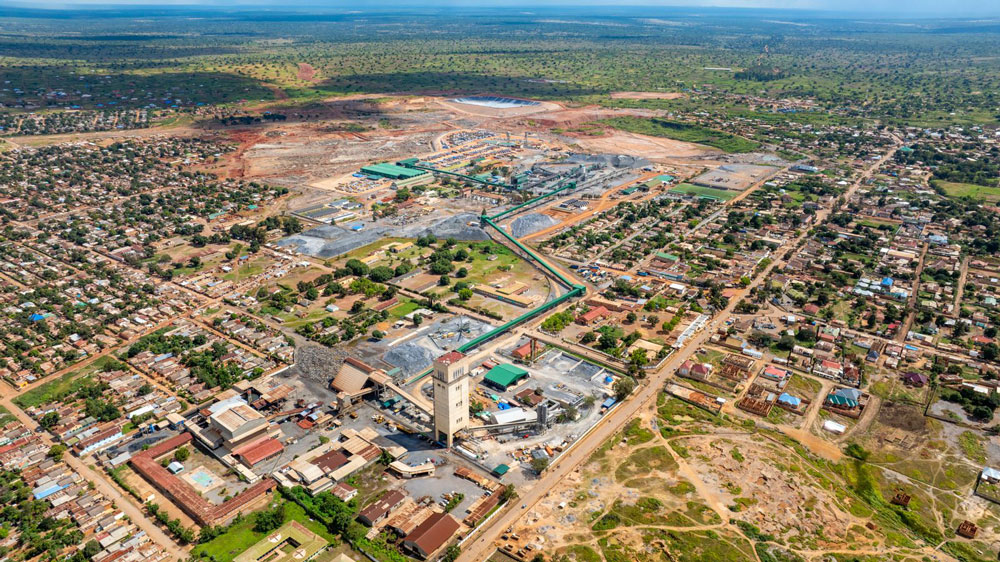
Kipushi Corporation SA, known as KICO, is the operator of the Kipushi Mine, one of KICO is a high-grade underground zinc-copper project in the Central African Copperbelt, adjacent to the town of Kipushi in the Democratic Republic of Congo, approximately 30 kilometres southwest of the provincial capital, Lubumbashi. Between 1924 and 1993, the mine produced approximately 60 million tonnes of ore grading
11% zinc and 7% copper. In addition to copper and zinc, the operation produced 12,673 tonnes of lead and approximately 278 tonnes of germanium between 1956 and 1978.
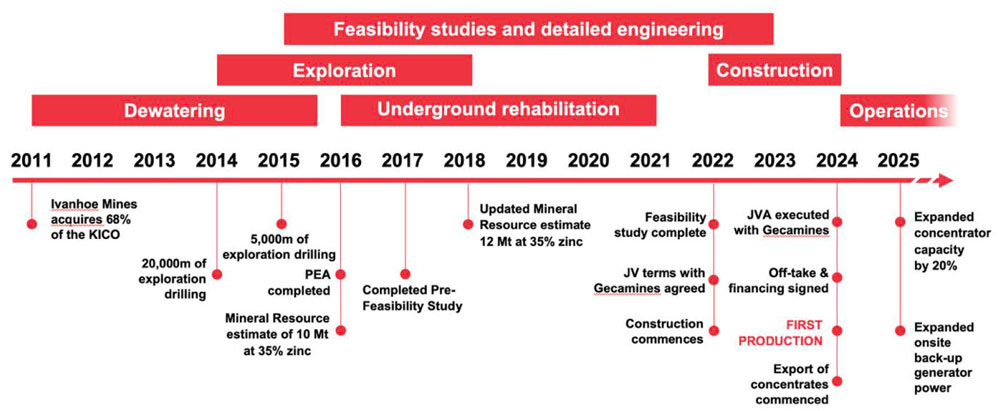
The mine was managed on a care-and-maintenance basis from 1993 onwards. In late 2022, Ivanhoe Mines and Gécamines finalised an agreement to return the operation to production through KICO.
KICO operates the world’s highest-grade zinc mine, producing zinc, copper, germanium, silver and lead concentrates. The mine is expected to produce more than 278,000 tonnes of zinc in concentrate over its first five years, with 2026 production guidance of 240,000 to 290,000 tonnes.

Ivanhoe Mines acquired its 68% interest in the project in November 2011 through Kipushi Holding, which is 100% owned by Ivanhoe Mines. The remaining 32% is held by the DRC state-owned mining company, Gécamines. Gécamines’ ownership will increase to 38% upon completion of the conditions precedent set out in the updated
joint venture agreement signed in late 2023.
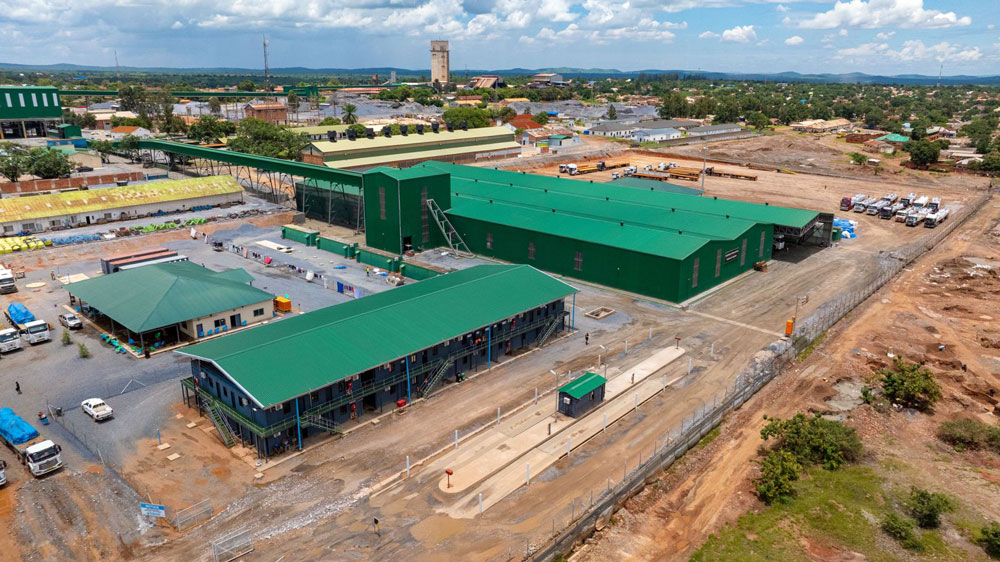
In 2025, KICO significantly increased output, delivering 203,168 tonnes of zinc. The company is planning to further increase production to 240,000-290,000 tonnes in 2026, following concentrator optimisation, which expanded throughput capacity by 20%.
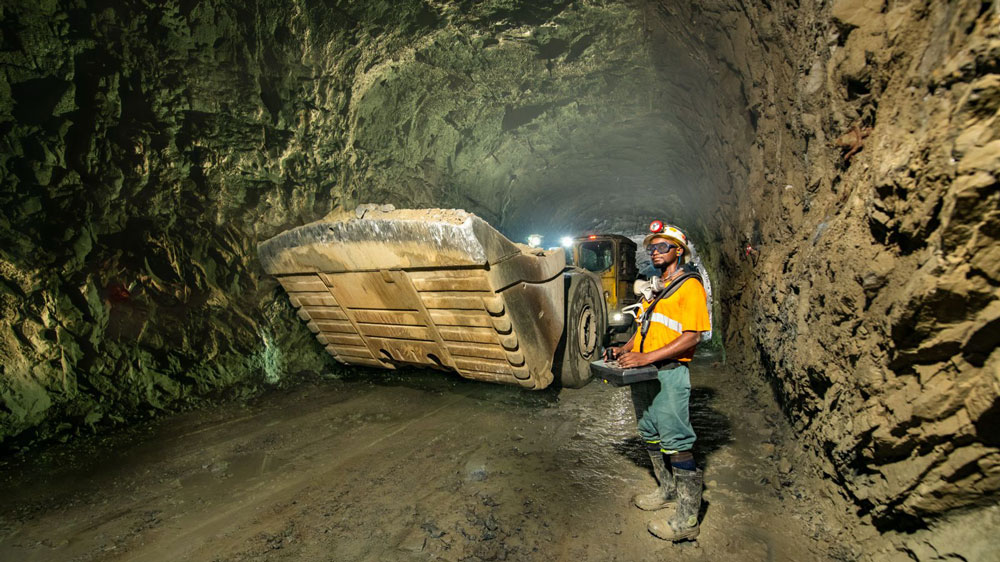
Underground development is advancing steadily to access multiple production levels within the high-grade Big Zinc and Southern Zinc zones, supported by decline and lateral tunnelling, which expand mining flexibility and resource access.
Ongoing exploration drilling continues to deliver exceptionally high-grade intersections, strengthening KICO’s understanding of the deposit’s structural geology and identifying extension targets for zinc, copper, silver and germanium mineralisation below and beyond historically mined zones. These results support long-term resource growth and operational resilience.
The current mine plan leverages a measured and indicated mineral resource base of approximately 11.8 million tonnes of zinc-rich ore grading over 35% zinc, focusing first on the richest zones identified in the 2022 feasibility study.
KICO ranks among the world’s largest zinc operations and is positioned as a core supplier to the global base metals market. The mine is recognised as one of the lowest carbon-intensity zinc operations in the world on a Scope 1 and 2 emissions
basis, reflecting its integration with renewable hydropower and optimised processing circuits. Independent assessments estimate a greenhouse gas footprint significantly below industry averages for zinc production.
Kipushi 2022 Feasibility Study, February 2022, Kipushi 2019 Mineral Resource
Update and Kipushi 2017 Pre-Feasibility Study, January 2018